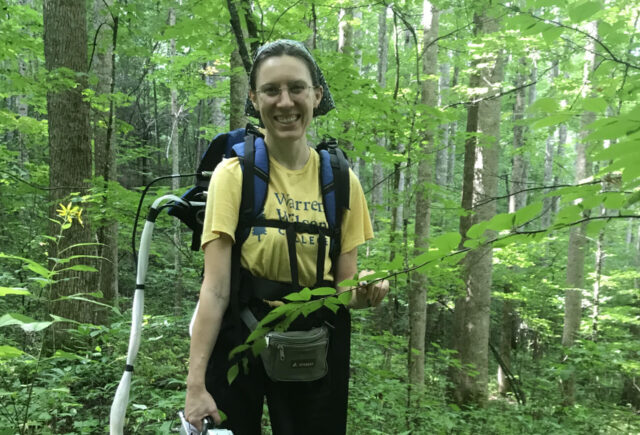
At Warren Wilson College, the wellness of our students is at the forefront of our mission. In an effort to create a sanctuary of support for mental health, the Nature Rx program, led by Matthew Vosler, draws on the benefits of outdoor spaces to foster mental well-being and mindfulness. The Nature Rx program finds its […]
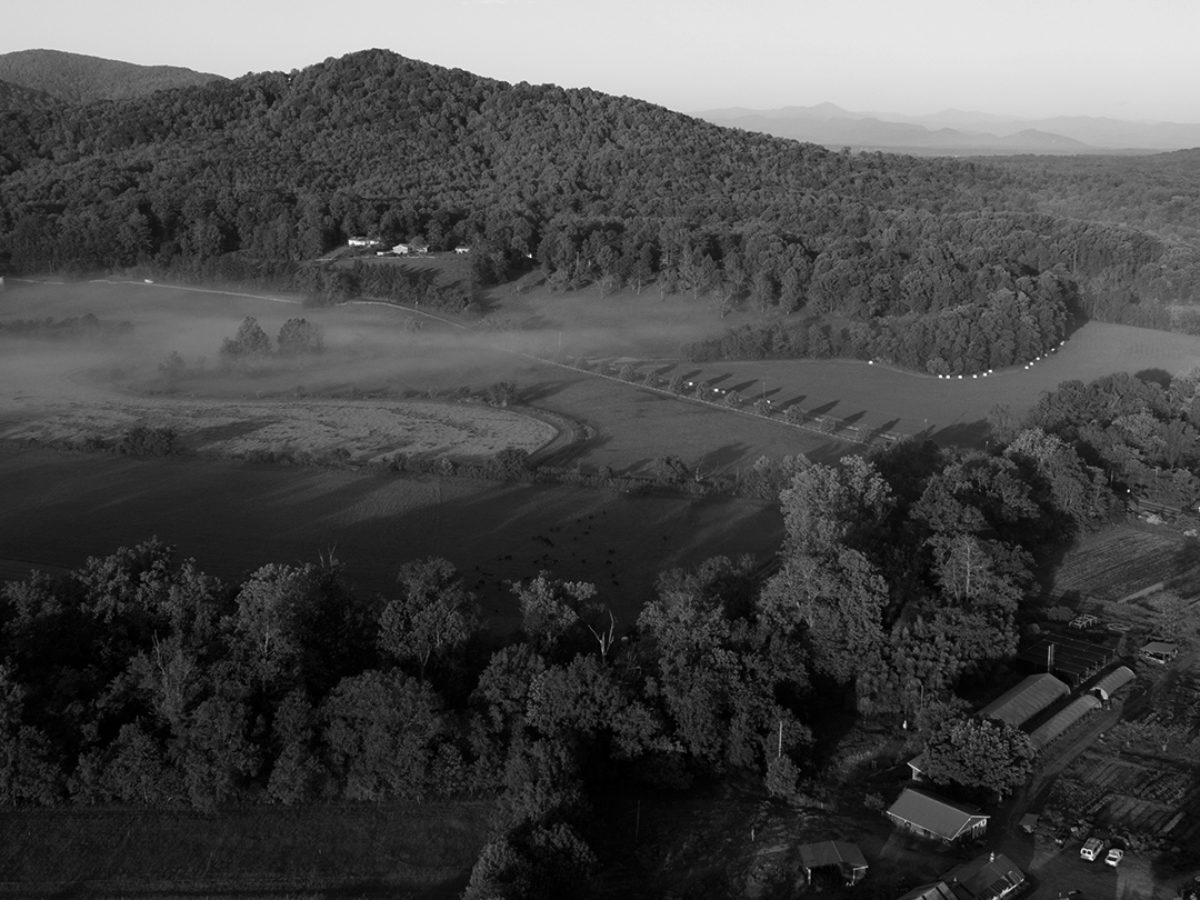
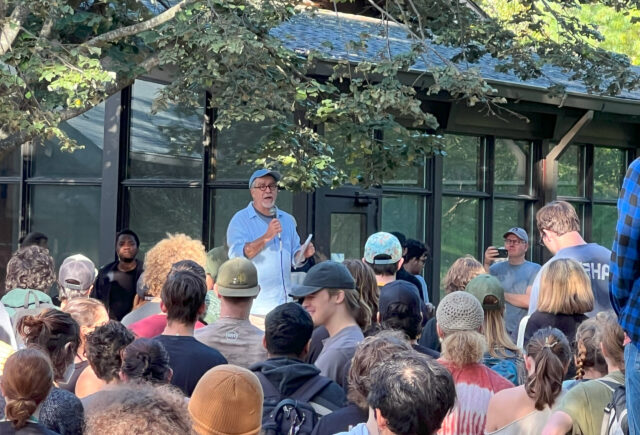
“Yesterday afternoon I learned that the conference report on Hurricane Helene Relief did not include funding for Warren Wilson College. We appreciate that our neighbors, Montreat College and Lees-McRae College, who also lost water and sewer access because of the hurricane, did receive funding. We know that the legislative process will continue with the House […]
Combining work, academics, and service is the hallmark of Warren Wilson College—and at the heart of what happens at the Center for Working Lands. That mission came to life this spring during a large-scale live staking effort led by Forest Manager Corinna Steinrueck, Associate Professor of Conservation Biology Dr. Liesl Erb, and a legion of […]
A newly published peer-reviewed study co-authored by Warren Wilson College faculty and recent graduates explores a little-known but essential part of forest ecosystems: fungal endophytes, the microscopic fungi that live inside leaves and help plants use water more efficiently. The study, titled “Site-Based Patterns of Variation in Leaf Endophytes and Ecophysiological Performance in Sweet Birch […]
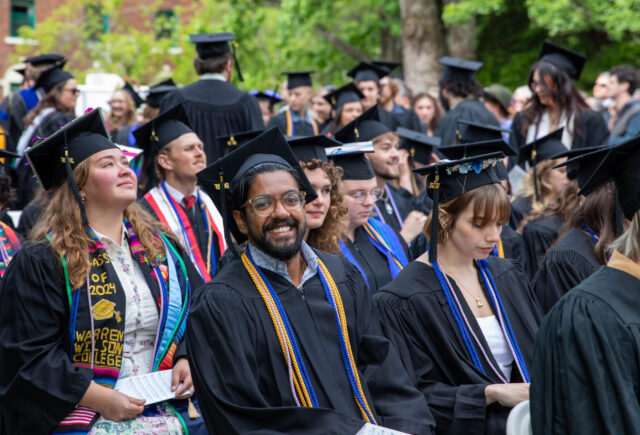
View photos of Commencement here. Warren Wilson College celebrated the Class of 2025 at its commencement on Saturday, May 10. 194 students received their degrees this year, including previously-awarded Master of Fine Arts recipients. After words of welcome from President Damián J. Fernández, and congratulations offered by several others, student speaker Violet Hill shared what […]
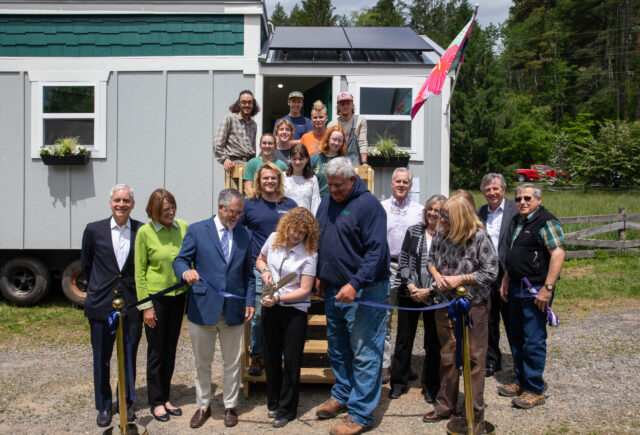
What began as a student idea has become a powerful symbol of resilience and community care. This spring, Warren Wilson College students completed construction on a fully functional tiny home—built by students for a family displaced by Hurricane Helene. The project is a vivid example of Warren Wilson’s education in action, where academics, work, and […]
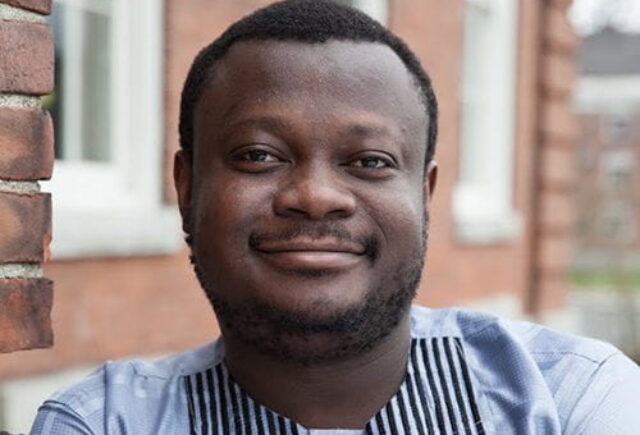
Warren Wilson College proudly celebrates Samuel Kọ́láwọlé, a member of the Fiction Faculty in the MFA Program for Writers, as a recipient of a 2025 Whiting Award. The award, one of the most prestigious honors for emerging writers in the United States, recognizes excellence and promise across fiction, nonfiction, poetry, and drama. Kọ́láwọlé is one […]
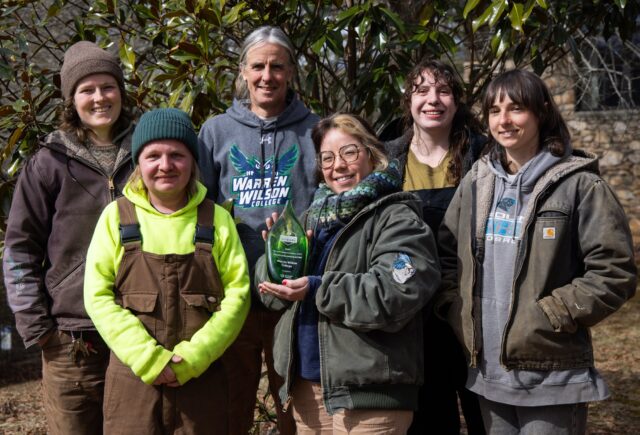
Warren Wilson College is proud to have been recognized with the Climate Resiliency in Action award as part of Second Nature’s inaugural Climate Luminary Honors. This national recognition highlights the college’s leadership in sustainability, resilience, and hands-on environmental education through the work of the Center for Working Lands. The Center for Working Lands serves as […]
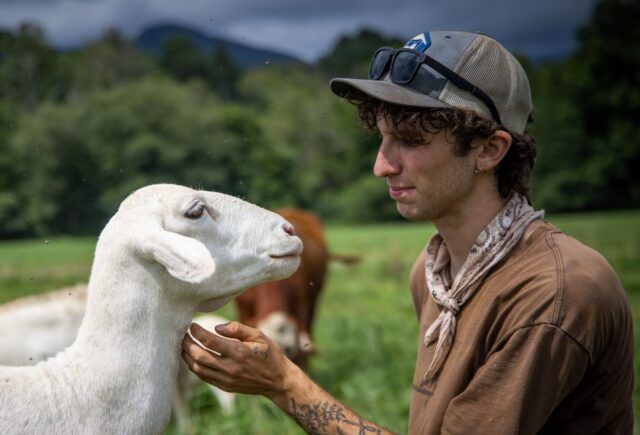
Warren Wilson College is responding to the growing regional and national demand for animal care, livestock production and veterinary medicine careers by launching a new Animal Science major for Fall 2025. Housed within the Biology and Chemistry Department, the program will offer both Bachelor of Arts (B.A.) and Bachelor of Science (B.S.) degrees, with an […]
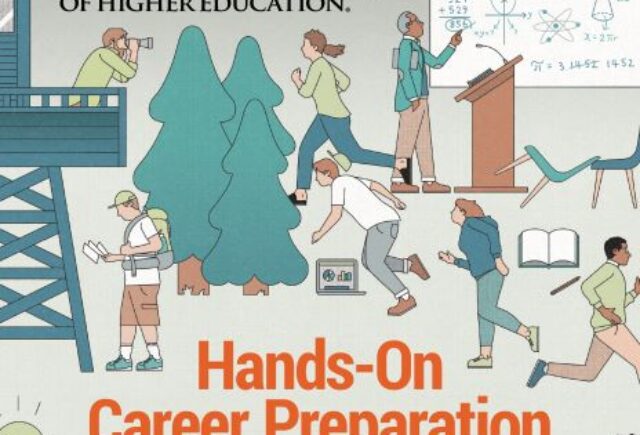
Warren Wilson College was featured in a Chronicle of Higher Education special publication entitled “Hands-On Career Preparation—Experiential learning to engage students and meet employers’ needs.” Section 2 of the report, “Experiential Learning in the Classroom,” includes insights from President Damián Fernández, Provost Jay Roberts, and student Luke Wheelan, and celebrates that WWC “bakes experiential education […]